
Free Back-to-School Bingo Printables
These free Back-to-School Bingo printables! can a be a fun classroom icebreaker and a creative way to shop for school supplies,
Plus, these printable bingo games are an easy way to get kids involved.
Inside, you’ll find 2 Bingo games:
- A find your classmate bingo to help students get to know one another
- A Back-to-School Shopping Bingo Checklist to turn your school supply trip into a game.
Along with these free bingo printables you’ll also get my Back to School Kids Routine Printables, all free, at the end of this post. It’s designed to make school mornings, homework, and bedtime easier for kids and families.
This page contains affiliate links. This means that if you make a purchase after clicking a link, I earn a small commission at no extra cost to you, please read my see my full disclosure policy.
Details of Free Back-to-School Bingo Printables
You’ll receive two fun and engaging printable bingo activities that are perfect for the start of the school year.
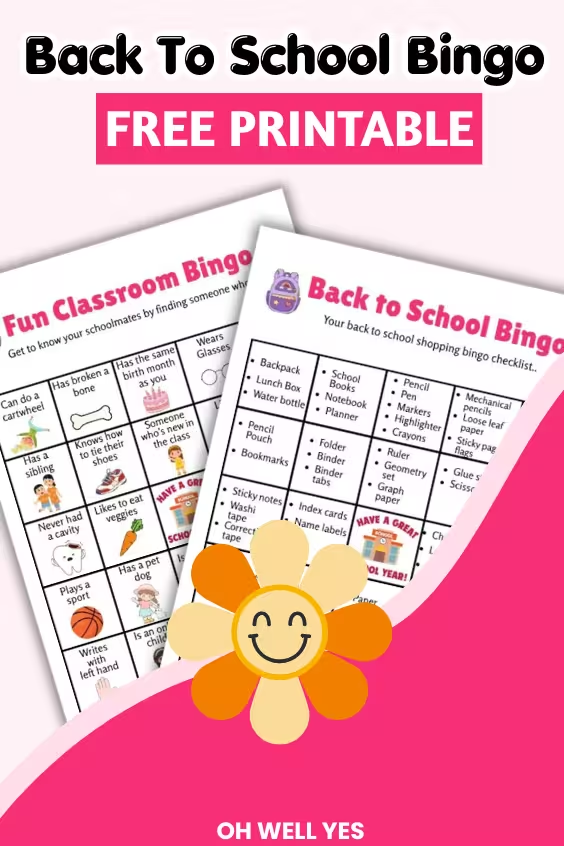
1. Classroom Icebreaker Bingo
Help students get to know one another with a fun “Find Someone Who…” bingo game. Kids will walk around the classroom, chat with their classmates, and fill in each square by finding someone who matches the prompt.
This printable includes:
- A 5×5 Classroom Bingo card
- 24 fun “Find Someone Who…” prompts
- 1 FREE space in the center
- Great for classrooms, homeschool groups, co-ops, and after-school programs
- Encourages conversation, teamwork, and new friendships
2. Back-to-School Shopping Bingo Checklist
Turn your school supply shopping trip into a fun challenge with this printable bingo checklist. Kids can look for common school supplies as they shop and check off each item they find along the way.
This printable includes:
- A 5×5 shopping bingo checklist
- Dozens of common school supply items to spot
- A fun way to keep kids engaged while shopping
- Perfect for elementary, middle school, and even high school students
- Helps make sure you don’t forget important school supplies
Together, these free bingo and kid routine printables help kids to get ready both for the classroom and new school year.
How to Print These Free Back-to-School Bingo Printables
Printing your bingo sheets is quick and easy!
- Download the free PDF using the button option below this section.
- Open the file on your computer, tablet, or phone.
- Print on US Letter (8.5″ × 11″) paper using the Actual Size or 100% Scale setting for the best results.
- For extra durability, print on cardstock or laminate the sheets so they can be used again and again.
- Hand out the Classroom Bingo during the first week of school, and bring the Shopping Bingo Checklist along on your next back-to-school shopping trip.
Tip: Print multiple copies so every student or child has their own bingo sheet. If you’re using the Classroom Bingo with a large group, it’s helpful to provide each child with a pencil or pen to write classmates’ names in the boxes. |
Why You’ll Love These Back-to-School Bingo Printables

- Break the ice: Helps students meet new classmates and start conversations during the first week of school.
- Build confidence: Encourages shy children to interact with others in a fun, low-pressure way.
- Keep kids engaged: Turns school supply shopping into an exciting game instead of a chore.
- Encourage teamwork: Gets kids moving, talking, and working together in the classroom.
- Reduce back-to-school jitters: Fun activities can help ease first-day nerves and create a positive classroom atmosphere.
- Easy to use: If printing is a hassle, you can use these freebies in the digital mode as well.
- Can be used in multiple settings: Great for classrooms, homeschool, co-ops, youth groups, and back-to-school events.
- Completely free: Download, print, and enjoy these activities at no cost.
Back to School Kids Routine Free Printable Details
If you’re trying to make the school year a little more organized, don’t miss my Free Kids Routine Printable Bundle. It’s designed to help children build healthy daily habits and make mornings, homework time, and bedtime feel a little less hectic.
Inside the bundle, you’ll find:
- Fun Classroom Bingo, to help kids know their classmates.
- School shopping bingo checklist, a comprehensive list of your school shopping supplies
- Kids daily routine checklist, that encourage independence while keeping your kid’s daily schedule on track.
- Earn Your Screen Time, to regulate your kids screen time and make them productive in the process.
- Lunchbox Notes for Kids, with cute and funny notes that will help kids to overcome the first week of school jitters and ease them into the daily school routine.
- Kids About me questionnaire: A fun scrapbook style printable keepsake to record all your child’s favourite things
Be sure to get your free Kids Routine Printable Bundle below and make your back-to-school routine even easier!
More Fun Kids Activities Posts
- 15 Back to School Stress-Free Traditions for kids to prep your kids gently for the new school year.
- 87 Screen-Free Summer Activities, a massive list of games and activities to keep your kids engaged and prevent the dreaded doom scrolling.
- Kids nature scavenger hunt game, a printable activity to help kids appreciate nature along with all the seasonal changes.
Get your free Kids Routine Printable Bundle

Suktara
Hi! I’m Suktara, the creator of this website with a background in communication and passion for personal development, relationships, and mental health. I created this space to share honest insights and practical advice on dating, love, relationships, and self-improvement.


3 Comments
George
This is such an important topic when it comes to personal growth and productivity.
I’d have to say biggest is checking my phone too frequently. And that leads to a lot of time wasting.
Getting a smartwatch has helped some because I can check notifications on there instead of opening my phone and getting sucked back in.
Isabella G
This is a wonderful article and you hit the mark. Two points you make really struck me deep. Wasting time and procrastinating. Before this global pandemic I used to have daily to do lists and I stuck to them. Now, I have been procrastinating and wasting so much time. My mindset switched from a productive person to a why bother person. The scary part is, Ive grown comfortable with it! I fight with myself daily to get back on track, I don’t like who I’ve allowed myself to become. My key point is I’ve allowed this to be my new normal. Ug. I’m in the process of turning my mindset around, however slowly.
Sandhya
Love this post! I need to work on saying “no” more often to things that don’t serve me.